Tree removal in San Diego County
Before anyone cuts, settle three things: who owns the tree, whether a permit applies, and whether power lines or nesting birds change the plan. We match you with an independent tree company that does the removal. This page covers what to sort out first.
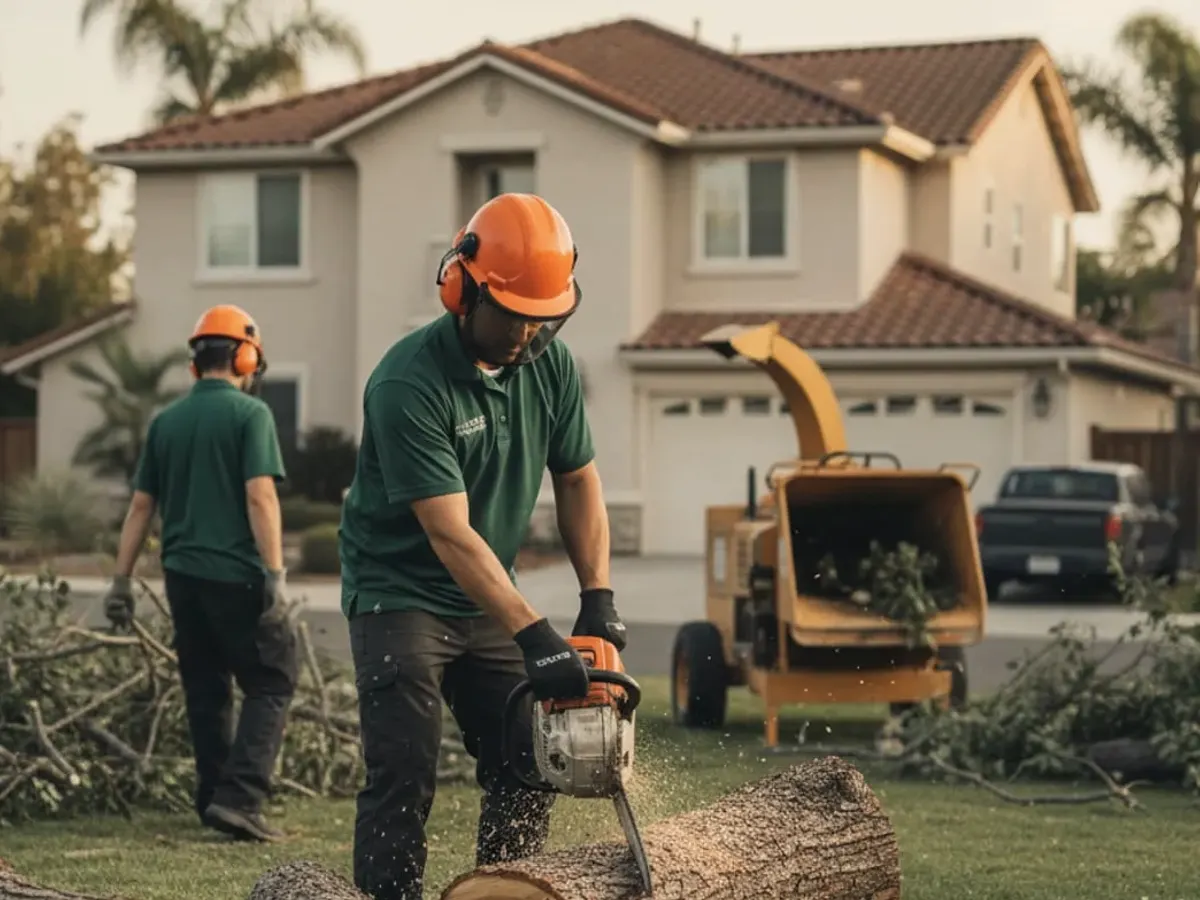
Is the tree yours, or the city's?
Trees in the strip between the sidewalk and the street usually belong to the city, and removing one takes a city permit. In the City of San Diego, the code bars anyone from cutting or removing a street tree without a permit, and that permit is void after 30 days (San Diego Municipal Code, Ch. 6 Art. 2 Div. 6, read Nov. 19, 2026). The city offers a no-fee permit after a staff inspection (City of San Diego, tree maintenance, read Nov. 19, 2026).
Other cities differ a lot. In El Cajon, "under no circumstance should a property owner trim or remove a parkway tree" (City of El Cajon, Urban Forestry, read Nov. 19, 2026). In Vista, owners next to a road are presumed to own the right-of-way trees in front of them and need a no-fee removal permit (City of Vista, Tree and Urban Forest Management, read Nov. 19, 2026). In unincorporated areas, the County requires a free permit for trees in the road right-of-way and takes about two weeks (County of San Diego tree permit brochure, read Nov. 19, 2026). Our area pages list the office for each city.
Does a tree in my own yard need a permit?
Not everywhere. The rules we've confirmed are local. Poway requires a private tree removal permit for native trees (coast live oak, canyon live oak, Engelmann oak and California sycamore) and for heritage trees (Poway Municipal Code Ch. 12.32, read Nov. 19, 2026). Escondido requires a vegetation removal permit before removing protected trees, defined as any oak 10 inches or more across at chest height (Escondido Zoning Code Art. 55, read Nov. 19, 2026). Removing an Encinitas heritage tree needs City Arborist approval and a Planning Commission hearing (Encinitas Municipal Code Ch. 15.02, read Nov. 19, 2026).
HOAs set their own rules too. If you're in one, get its approval in writing before the crew is booked.
What if birds are nesting in it?
California law makes it unlawful to needlessly destroy a bird's nest or eggs, and the federal Migratory Bird Treaty Act protects migratory birds (CDFW, California Outdoors Q&A on nesting birds, read Nov. 19, 2026) (U.S. Fish and Wildlife Service, Migratory Bird Treaty Act, read Nov. 19, 2026). CDFW puts nesting season at "typically considered February through August," and suggests a nesting survey before work in season (CDFW, California Outdoors Q&A on nesting birds, read Nov. 19, 2026). If the tree isn't a hazard, removing it in fall or winter avoids the problem.
What if it's near a power line?
Call SDG&E at 1-800-411-7343 before anyone climbs. SDG&E prunes and removes trees near its lines "at no cost to the property owner" (SDG&E, Tree safety and vegetation management, read Nov. 19, 2026). California's work-safety rules keep workers at least 6 feet from lines carrying 600 to 50,000 volts unless the line is guarded (Cal/OSHA Title 8, Section 2946, read Nov. 19, 2026).
What should the removal quote list?
- The tree, its rough height, and how it comes down: climbed and lowered in pieces, felled, or crane.
- Whether the stump is ground, how deep, and whether surface roots are included.
- Haul-away of wood and chips, or what stays on site.
- Who pulls any city or HOA permit, and who pays for it.
- Protection for fences, pavers, sprinklers and plants, and who pays if something breaks.
One local review describes a split job: the tree came down, then the crew said "the grinder for stump removal is not available." Ask whether the grinder comes the same day. Then check the license on the CSLB license check. Since 2025 an unlicensed worker can only take jobs under $1,000 if no permit is needed and they hire no helpers (CSLB Industry Bulletin 24-07 (AB 2622), read Nov. 19, 2026), which rules out nearly every removal.
Questions people ask about tree removal
Do I need a permit to remove a tree in San Diego?
For a street or parkway tree, yes: the City of San Diego requires a permit (San Diego Municipal Code, Ch. 6 Art. 2 Div. 6, read Nov. 19, 2026), and it's a no-fee permit issued after city staff inspect the tree (City of San Diego, tree maintenance, read Nov. 19, 2026). For a tree in your own yard, the rules we've confirmed are local: Poway, Escondido and Encinitas each protect certain private trees. Check your city's page before booking.
Will the city remove a street tree that drops leaves or blocks my view?
Usually not. Oceanside says it does not remove street trees for blocked views or falling leaves, pine cones or seeds (City of Oceanside, street tree maintenance, read Nov. 19, 2026). San Marcos says general tree debris isn't a reason for removal on its own (San Marcos Tree Inspection and Maintenance Policy, read Nov. 19, 2026).
Is stump grinding part of tree removal?
Only if the quote says so. Ask for the stump depth in writing. Chula Vista requires stumps ground at least 12 inches deep on approved parkway removals (City of Chula Vista, Urban Forestry, read Nov. 19, 2026), and Encinitas 16 inches for city and heritage trees (Encinitas Municipal Code Ch. 15.02, read Nov. 19, 2026).
Does homeowners insurance pay to remove a tree?
Sometimes, and usually not much. The California Department of Insurance says trees are insured on a limited basis, generally 5% of the dwelling limit with a $500 (sometimes $250) limit per tree (California Department of Insurance, Residential Property Claims Guide, read Nov. 19, 2026). Our emergency page explains more.
Tell us what the tree needs.
Call or send the form with the address and the job. Whoever you hire, get the price, the climbing method and the cleanup in writing, and check the license on the CSLB site first.